
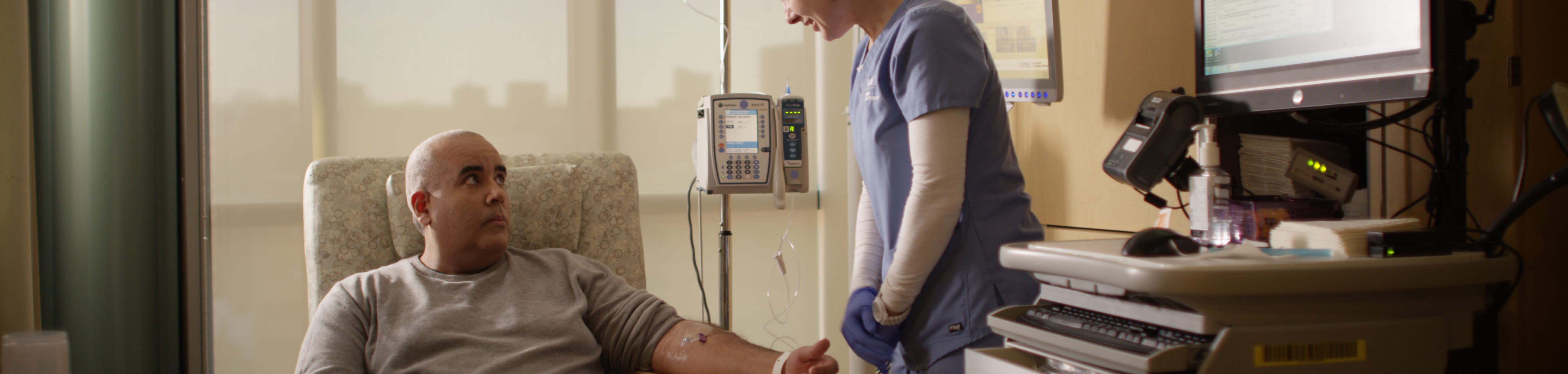
Clinical Trials
Clinical trials are voluntary research studies that evaluate new cancer treatments, medications, and procedures to determine how well they work. By participating in a clinical trial, you can help advance cancer research while gaining access to innovative therapies that may not be widely available. All clinical trials are closely monitored to help protect participant safety and ensure reliable results.
At UPMC Hillman Cancer Center, we conduct some of the nation's most innovative cancer research and clinical trials. Our researchers work closely with clinicians to translate promising discoveries from the laboratory into clinical trials and patient care. This integrated approach gives patients throughout the UPMC Hillman Cancer Center network early access to emerging cancer treatments and therapies.
For more than 30 years, our commitment to excellence in cancer care, research, and innovation has helped drive advances in prevention, diagnosis, and treatment. We continue to:
- Pioneer new cancer treatments through groundbreaking research.
- Develop and evaluate better treatment options through clinical trials.
- Invest in advanced technologies that support personalized, high-quality patient care.
Our goal is to reduce the burden of cancer and improve outcomes for patients everywhere.
Learn more about Clinical Research Services.
Search for an Active Clinical Trial
About Clinical Trials
A clinical trial is a research study to help find new ways to prevent, detect, and treat cancer and other diseases. In a clinical trial, doctors test new procedures, medications, or devices on patients who volunteer for the study. Participants in clinical trials take part knowing that the treatment is new and unproven.
Clinical trial protocols are different from the standard treatment for cancer.
Standard cancer care aims to cure or manage your cancer using proven methods. Doctors use drugs, therapies, and procedures that have worked before and are approved by the United States Food and Drug Administration (FDA). They are aware of the potential side effects of each type of treatment.
In a clinical trial, the chief goal is to advance medical knowledge. Doctors and researchers gather information to use in the future. But people who take part in clinical trials may also benefit from receiving innovative, cutting-edge care.
If you choose to take part in a clinical trial, you will be given an informed consent. This will mean that you will be agreeing to be part of the study, which will include frequent monitoring. You will have the understanding that the new treatment options may not work as well as existing treatment options, or they may have the potential to be more effective.
Your health care provider can tell you about upcoming or ongoing clinical cancer trials, and whether you’d be a good fit. The clinical trial eligibility criteria will vary by individual research study.
You may be eligible for a clinical trial if:
- Standard treatments for your cancer didn’t work.
- You don’t have cancer but are in a high-risk group for developing a certain type of cancer.
- You have a specific type of cancer.
- Your cancer is at a specific stage.
- You’re willing to explore treatments that go beyond standard care.
Other common eligibility criteria include factors such as:
- Age.
- Family medical history.
- Overall health.
- Previous treatments.
- Risk factors.
- Your medical history.
- Your tumor’s genetic makeup.
Most advances in the diagnosis, treatment, and prevention of cancer have occurred from information gathered through clinical trials.
By participating in a clinical trial, you can:
- Be an active participant in your treatment.
- Contribute to research that will help people in the future.
- Get access to new, possibly more effective treatments.
- Have close medical monitoring.
- Know that you are helping other people with the specific type of cancer you have.
Risks of being in a clinical trial
Being part of any clinical trial comes with some risks. Your care team will go over specific risks of any treatment with you before starting any clinical trial.
These are some of the general risks of participating in a clinical trial.
- The experimental treatment may have a worse outcome than standard treatment.
- There may be unpredictable side effects to the treatment, and they may require medical attention.
- You may have to schedule more appointments, tests, or time in the hospital than with standard treatment.
Before you enroll in a clinical trial, you will go through certain steps.
Before the study
First, you must qualify to be part of the study. Your care team will guide you through a screening process to see if you’re a good fit for a clinical trial. They’ll gather information about your medical history, condition, and previous treatments.
Research staff will explain the study in detail and answer your questions.
Before any treatment begins, you’ll need to sign an informed consent document approved by an ethics review committee or Institutional Review Board (IRB). This group makes sure the risk to participants is as low as possible.
Informed consent means that you understand what to expect as a participant in the study, and that different outcomes could occur.
The informed consent document will include information about the study, including:
- A summary of what will happen during the study.
- Any payments or costs to you.
- How much of your time the study will take.
- The known benefits and risks of participating.
- The treatment schedule.
- Who is eligible to join the study.
During the study
If you get accepted into the study, you will have frequent communication with doctors, researchers, and medical staff. Clinical trials can take place at hospitals, clinics, research centers, and universities. A clinical trial may take weeks, months, or years.
During the study, you’ll receive careful monitoring, regular lab tests, and frequent imaging. You will have support from a dedicated health care team of doctors and nurses.
You will receive the new treatment but will also keep seeing your regular oncologist. The research staff will work closely with your regular doctors. They will monitor you for any negative reactions or side effects.
If very serious health problems occur, researchers may stop the study.
After the study
After the clinical trial is over, you will continue to have follow-up care. Each person may have a different schedule, depending on:
- Any complications or side effects of treatment.
- What kind of cancer you have.
- What kind of treatment you received.
- Your overall health.
You will return to the study health care team for follow-up appointments. They’ll determine how often these visits occur based on the requirements of the clinical trial.
At the follow-up visits, you’ll have a physical exam, blood tests, and any other appropriate tests or procedures. Your doctor will let you know what’s right for you based on your recovery and overall health.
During these visits, you should talk about any physical or emotional issues you’re having. Mention any symptoms, pain, side effects, or concerns. Some cancer treatments cause side effects that don’t show up for months or years after treatment.
You’ll get a written summary of your treatment after the clinical trial. It’s important to share this with your primary care provider (PCP).
First, you should talk to your cancer care team about whether you should take part in a clinical trial. They know you and your condition. They may be able to recommend current clinical trials that match your condition and treatment goals.
Your care team may also know about a certain clinical trial and ask you if you want to participate. Cancer patients or people who are at high risk of getting cancer may be eligible for certain research studies.
You can also use online resources to find more information about cancer research and clinical trials.
Your care team will be your partner in any clinical trial. It’s important to ask questions and get all the information before making an informed decision. You will want to weight the pros and cons of being part of any clinical trial.
Your health care provider may suggest a clinical trial as part of your treatment when appropriate. You and your care team will share decision-making during the entire process of being part of a clinical trial. You can’t be part of a clinical trial without your doctor’s approval.
Here are some questions you can ask your provider when thinking about being part of a research study.
- Can I withdraw from the study if I have bad side effects from the treatment?
- How long will each treatment last?
- How long will the entire study last?
- How often will I need to come to the hospital or doctor’s office?
- What are the medical risks of the study?
- What treatment or treatments will I receive? In what form?
- Will I receive results from the study?
- Will my insurance cover an experimental treatment?
For 30 years, UPMC Hillman has shown a commitment to excellence in all aspects of cancer care and research.
Here are some things that set us apart.
- We are nationally recognized — UPMC Hillman is a National Cancer Institute (NCI)-designated Comprehensive Cancer Center. This is a prestigious classification for United States cancer centers. We are making vast strides in the global effort to reduce the burden of cancer.
- We have a strong research base — We have more than 300 cancer researchers who work closely with clinicians. That means we can move the most promising results from labs quickly into clinical trials, giving you access to new, innovative treatments.
- We invest in smart technology to treat all forms of cancer — We're constantly upgrading our arsenal of cancer treatment equipment to better care for our patients. Innovations include high-tech diagnostic imaging, electronic health records, and advanced radiosurgery devices.
- We offer disease-specific studies — Our providers have the expertise needed to oversee clinical trials in a range of specialties. The areas of cancer treatment include:
- Biobehavioral.
- Blood.
- Brain.
- Breast.
- Gastrointestinal (GI).
- Gynecologic.
- Head and neck.
- Immunotherapy and drug development.
- Lung.
- Melanoma.
- Pediatrics.
- Radiation.
- Sarcoma.
- Urologic.
- We train the next generation — We educate up-and-coming cancer researchers and doctors. UPMC also recruits world-renowned scientists on an ongoing basis.
Search Clinical Trials
Please select a valid treatment from the list or leave the field blank.
Please enter a valid ZIP code of format "#####"
